Fascial Stretch Therapy in Honolulu, HI
Feel Flexible Today.
Discover blissful flexibility & pain relief with Fascial Stretch Therapy in Honolulu. Relax deeply and move freely – book your life-changing session now!
Why You Need Assisted, Table-Based Stretching
That tight, “stuck” feeling isn’t always about needing to stretch more – it’s often your body protecting itself. When your hips feel bound up, your back won’t relax, or your shoulders catch every time you reach, you start moving around the problem instead of through it.
Keep doing that long enough and your range shrinks, your movement gets choppy, and everyday tasks (and workouts) take more effort than they should.
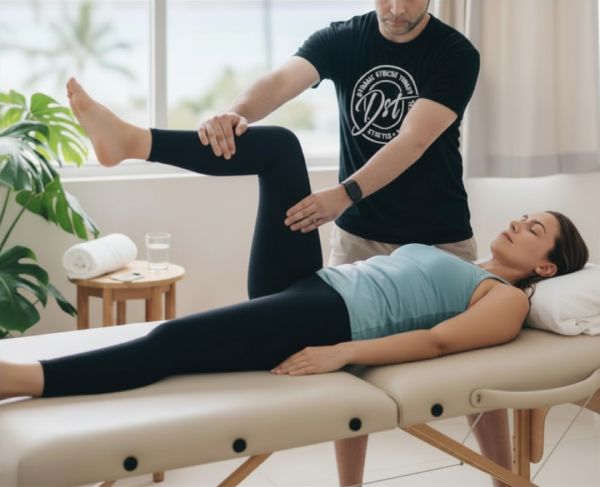
Fascial Stretch Therapy (FST) at Dynamic Stretch Therapy is assisted, table-based stretching that works with your nervous system and your fascia as one connected system. Through gentle traction and guided multi-directional movement, we help you create space in the joints and regain smooth, usable mobility – without forcing positions or “pushing through” pain.
When Tightness Starts Running Your Day
Most people don’t wake up and decide to “get stiff.” It builds quietly – long hours sitting, repetitive training, stress that lives in your neck and jaw, old injuries that never fully let go.
You start avoiding certain movements. You warm up longer. You stretch, but it doesn’t last. Over time, your body begins to compensate: you rotate through your low back instead of your hips, shrug through your shoulders instead of reaching freely, brace your breathing without noticing.
That’s not just frustrating – it can change how you feel in your own skin. When your body feels restricted, confidence takes a hit. You may feel older than you are, less athletic than you know you can be, and less willing to do the things that usually keep you grounded.

What Happens When You
Keep Pushing Through It...
Ignoring tightness rarely keeps it “the same.” Stiff areas tend to pull on nearby joints, and your nervous system learns to guard. That can look like recurring back flare-ups, nagging hip pain, limited overhead motion, headaches from upper-body tension, or a sense that your posture is collapsing by the end of the day.
The longer your body moves around restrictions, the more normal that pattern feels – until a simple twist, a deep squat, or an extra busy week tips you into pain. Self-care starts to feel like a luxury, even though your body is asking for it every day.
A Different Kind Of Stretch:
Traction, Rhythm & Full-Body Connection
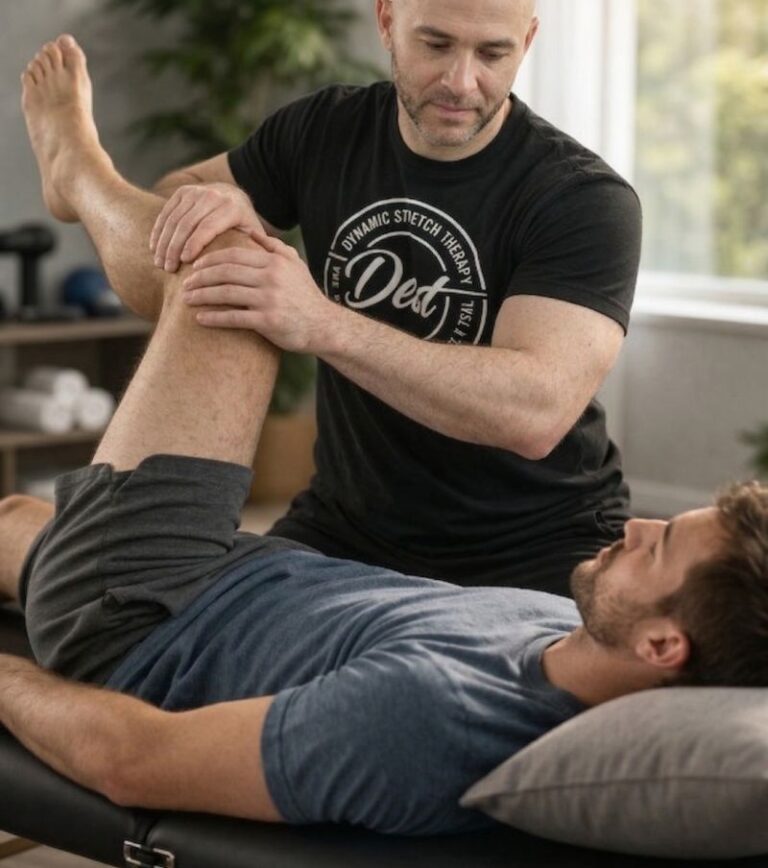
FST is not a “hold for 30 seconds and hope” stretch. It’s assisted stretching done on a table with a certified practitioner guiding your body through gentle traction, oscillation, and multi-directional movement.
The goal is to create space in the joints, improve how tissues glide, and help your nervous system allow more range – without forcing or fighting your body.
Dynamic Stretch Therapy uses ongoing assessment throughout the session, so the work stays focused on what your body shows in real time. Many clients like FST because it feels supportive and specific: you’re not trying to perform a pose, and you’re not competing with anyone in the room. You’re simply moving toward freer motion, one layer at a time.
Benefits You Can Feel After FST Therapy in Honolulu
Clients often book FST for flexibility, then keep coming back for how it changes daily life. Benefits may include:
- Easier joint motion (hips, shoulders, spine) that feels smooth instead of tight
- Less “deep stiffness” that typical stretching doesn’t touch
- Easier joint motion (hips, shoulders, spine) that feels smooth instead of tight
- Less “deep stiffness” that typical stretching doesn’t touch
- Better posture and body awareness without constant effort
- Improved recovery after training, travel, or long work weeks
If you’re active, FST can support cleaner mechanics for running, lifting, surfing, golf, martial arts, or yoga. If you’re not training right now, it can still be a powerful reset for comfort, breathing, and everyday movement.
Your 4-Step FST Experience at DST
A personalized journey to a freer motion.
1. Consult
You’ll talk through your goals, what feels limited, and what you want to get back to – whether that’s pain-free reaching, deeper squats, or simply feeling looser walking around Honolulu.
2. Customize
Your practitioner checks how you move and where you compensate. The session plan is built around your body, not a generic routine.
3. Treat
You’ll relax on the table while your body is guided through assisted stretches using traction, gentle rhythm, and breath support. Pressure stays within a comfortable range, with clear communication the whole time.
4. Glow
You’ll stand up and re-test key movements, then leave with simple guidance so the changes last longer between sessions.
Choose Your FST Session Length
Dynamic Stretch Therapy offers 60-minute and 90-minute sessions, giving you the time to address full-body tension without rushing.
60 Minutes
If you’re maintaining progress, targeting one primary issue, or you’re new to assisted stretching, 90 minutes is a great start.
- Full body assessment
- Targeted FST treatment
- Post-session guidance
90 Minutes (recommended)
- In-depth movement analysis
- Comprehensive full-body work
- Multiple re-checks & adjustments
What Our Clients Say
Frequently Asked Questions
What makes Fascial Stretch Therapy (FST) different from regular stretching in Honolulu?
FST is assisted stretching done with a trained practitioner. Instead of only pulling on a muscle and holding, FST uses traction and multi-directional movement to support joint space and tissue glide. Sessions are tailored to how your body moves that day. Many clients notice it feels more comfortable than forcing stretches on the floor, with results that carry into daily movement.
Does FST hurt? What will I feel during a session?
FST should feel strong but safe – more like a deep, relieving stretch than sharp pain. You may feel gentle pulling through a joint, a wave-like motion, and a sense of “unwinding” in areas that stay guarded. Your practitioner checks in often and adjusts angles, intensity, and breath cues so your body can release without bracing.
How many FST sessions do I need to see results?
Some people feel changes after one session, especially in range of motion and general ease. For long-standing tightness, posture patterns, or recurring pain, a short series often helps your body hold the gains. Your ideal frequency depends on training load, stress, past injuries, and how quickly your nervous system adapts to new movement. Consistency beats intensity.
What should I wear or do before my Honolulu FST appointment?
Wear comfortable clothing that allows movement – athletic shorts or leggings and a breathable top work well. Try to arrive hydrated and avoid heavy meals right before your session. If you have recent imaging, a diagnosis, or notes from a provider, bring them. After your session, light walking and easy movement can help you keep the new range.
Can Fascial Stretch Therapy help after an injury or surgery in Honolulu?
FST may support mobility after injury or surgery once you’re cleared for movement by your medical provider. It can be useful when stiffness, guarding, or compensation patterns linger after the tissue has healed. Your practitioner can modify positions and intensity to respect sensitive areas. If you have nerve symptoms, unexplained swelling, or sharp pain, get medical guidance first.