Kinesiology Taping in Honolulu
Support & Recover Stronger
Get targeted support and faster recovery with kinesiology taping in Honolulu. Reduce strain, improve circulation, and move confidently!
Move Better & Recover Faster with Targeted Support
When something feels “off” in your body, you don’t always need more rest – you need better support while you keep moving.
A shoulder that feels unstable, a knee that aches on stairs, a tight lower back that flares after long days, or a lingering strain that won’t fully settle can change how you train and how you carry yourself.
If you keep pushing through without support, your body often compensates, irritation builds, and recovery drags out.
Over time, this can limit your performance, reduce confidence in movement, and make simple activities feel harder than they should.
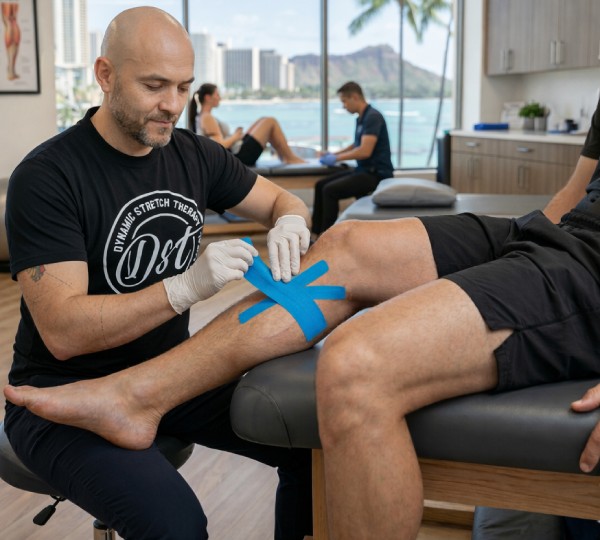
Kinesiology Taping at Dynamic Stretch Therapy in Honolulu is designed to support muscles and joints without restricting your range of motion. Using high-quality elastic tape, we apply targeted patterns that help reduce strain, improve body awareness, and encourage healthier movement while you work, train, and recover.
When You Need Support, Not a Brace
Kinesiology tape is a great fit when you want stability but still need freedom to move. You might benefit if you notice:
- Joint discomfort during workouts, surf sessions, or daily movement
- Muscles that fatigue early or feel like they “won’t turn on”
- Overuse irritation from repetitive work or training
- Posture drifting as the day goes on
- A lingering ache that changes your movement pattern
Unlike rigid athletic tape, kinesiology taping is flexible. It supports your system while allowing natural motion – so you can keep moving without feeling locked down.
What Happens When You
Ignore Those Small Signals
Minor discomfort has a way of spreading. A sore knee can lead to hip tightness. A cranky shoulder can turn into neck tension and headaches. When your brain senses instability or pain, it changes your mechanics – often without you noticing.
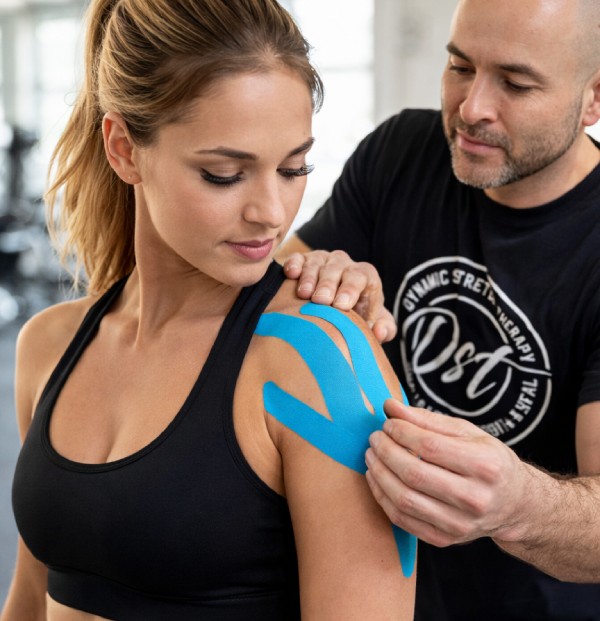
That’s where kinesiology taping shines. It gives your body a subtle cue: “This area is supported.” That cue can reduce protective tension, improve alignment, and help you move with more confidence while the underlying issue is being addressed.

A Smarter Way to Move
While You Heal
Kinesiology taping works by gently lifting the skin and providing feedback through movement. Depending on how it’s applied, taping may help:
- Support muscles and joints during activity
- Reduce irritation by decreasing strain on tissue
- Encourage circulation and lymphatic flow
- Improve proprioception (your body’s awareness of position and motion)
- Reinforce better posture and movement patterns
At Dynamic Stretch Therapy, taping is never a one-size-fits-all strip slapped on and sent out the door. Your application is based on how you move, what you’re feeling, and what you need the tape to do – support, cue, unload, or assist. It’s often paired with mobility work, hands-on therapy, or stretching so the tape supports real progress, not just temporary relief.
Benefits You Can Expect from Kinesiology Taping in Honolulu
Clients use kinesiology taping in Honolulu for both performance and everyday comfort. Benefits may include:
- More stable movement without feeling restricted
- Less discomfort during training and daily tasks
- Better body awareness and cleaner mechanics
- Reduced post-activity soreness in irritated areas
- A supportive “reminder” to move with better alignment
- Light support during recovery so you can stay active without overloading the area
Whether you’re lifting, running, surfing, golfing, working on your feet, or sitting at a desk all day, taping can help your body feel more supported in the positions that usually trigger discomfort.
Your 4-Step Kinesiology Taping Experience at DST
Here’s what the process looks like from the moment you walk in to the moment you leave moving with more confidence.
1. Consult
You’ll share what you’re feeling, what movements aggravate it, and what your goals are—pain relief, stability, posture support, or performance.
2. Customize
Your practitioner evaluates movement patterns and tissue response to determine the best taping strategy. Placement and tension are selected for your specific need.
3. Tape
The tape is applied in targeted patterns designed to support without limiting motion. You’ll test the movement right away so adjustments can be made on the spot.
4. Move Better
You’ll leave with guidance on how long to wear the tape, how to care for it, and what to avoid so you get the best result. Many clients feel immediate improvement in comfort or control when they re-test the movement.
Book Your Kinesiology Taping Session Today
If discomfort is changing how you move, don’t wait until it becomes a bigger issue.
Book kinesiology taping in Honolulu and get the support your body needs to move confidently again – without feeling braced or restricted.
What Our Clients Say
FAQs About Kinesiology Taping
How long does kinesiology tape last in Honolulu’s humidity?
Most applications last 3–5 days, even with workouts and showers, depending on skin type, activity level, and how well the tape adheres. Proper application and aftercare help it stay on longer. Your practitioner will explain how to keep it secure, especially in Honolulu’s warm, humid climate.
Does kinesiology taping restrict movement?
No. Kinesiology tape is designed to move with you. It provides support and sensory feedback without locking a joint in place like rigid tape or a brace. That’s why it’s popular for active clients who still want full range of motion while reducing strain and improving movement quality.
What conditions can kinesiology taping help with in Honolulu?
Kinesiology taping is often used for muscle strain support, joint irritation, posture cueing, and overuse discomfort in areas like shoulders, knees, backs, elbows, and ankles. It can also support swelling management when applied with specific techniques. Your practitioner will choose the right approach based on what your movement assessment shows.
Will kinesiology taping in Honolulu remove my pain completely?
Sometimes it can reduce pain quickly, but it’s best viewed as supportive – not magic. The tape helps your body move with better mechanics and less strain while you heal. For longer-term results, taping is often paired with mobility work, strengthening, hands-on therapy, or assisted stretching to address the root cause.
Is kinesiology tape safe for sensitive skin?
Usually yes, but skin sensitivity varies. If you’ve reacted to adhesives before, tell your practitioner. We can adjust placement, use gentler techniques, or test a small patch first. If you notice itching, rash, or discomfort under the tape, remove it and wash the area with mild soap and water.