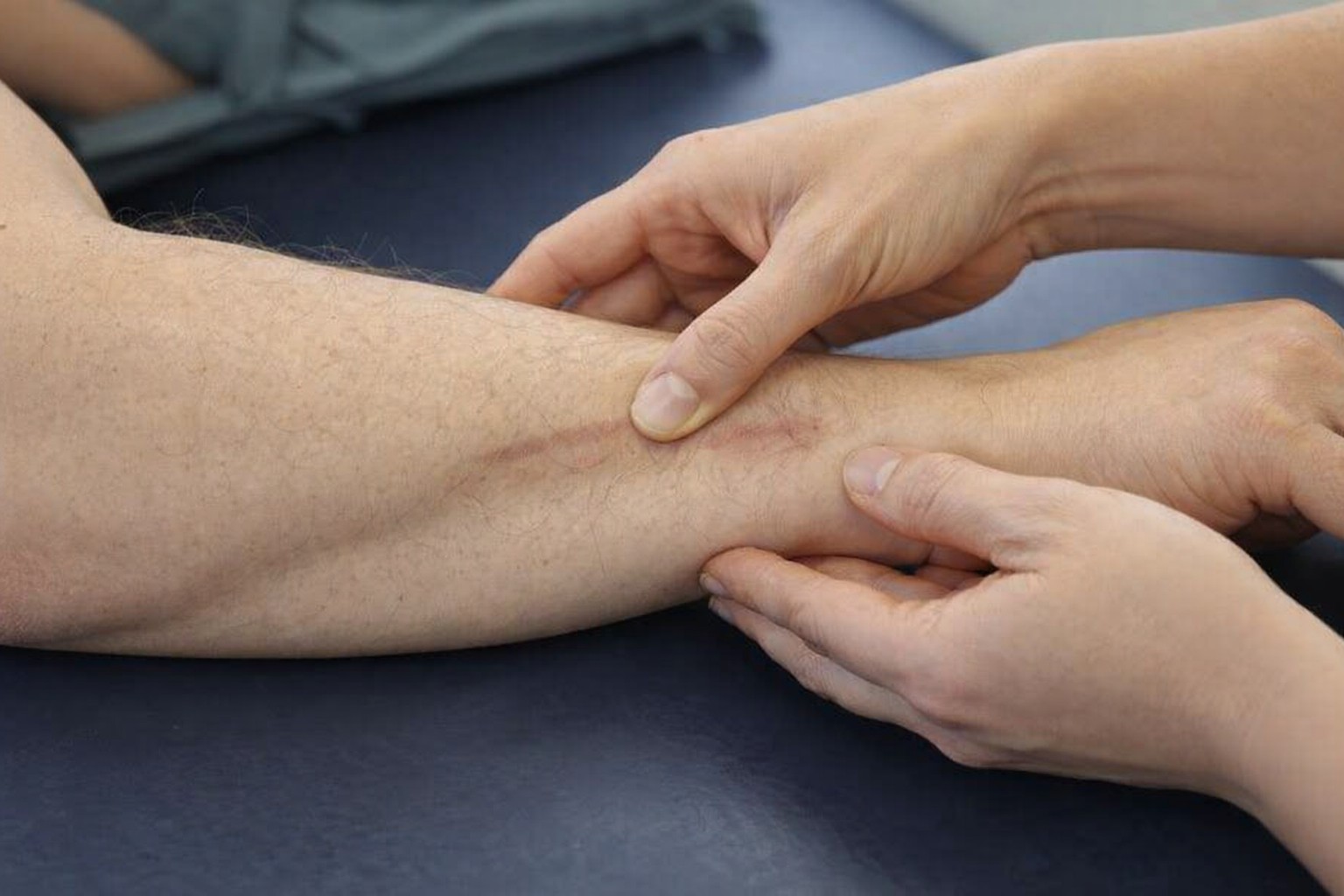

Your body healed, but something still feels off. Movement feels tight. Stretching does not help much. Pain shows up during workouts or even simple daily tasks. This is common when scar tissue does not heal properly.
Scar tissue therapy helps address the real issue. It works below the surface where scar tissue, fibrous tissue, and adhesions restrict movement. Many people in Honolulu stay active year-round, and untreated scar tissue often becomes the hidden reason for stiffness, pain, and limited range of motion.
This article explains how scar tissue forms, why it causes problems, and how manual therapy methods can remodel scar tissue so you can move better again.
What Is Scar Tissue and Why It Forms
Your body repairs damaged tissue through the wound healing process. It sends collagen fibers to close and stabilize the area. This process protects you, but speed matters more than quality early on.
The body creates new tissue fast, not perfectly. Collagen fibers often form in random directions. This creates fibrous tissue that lacks elasticity. Without proper movement and scar management, that tissue stiffens.
According to medical research, scar tissue differs structurally from healthy tissue and often limits normal motion.
Healthy Tissue vs Scar Tissue
Healthy tissue stretches and glides. Scar tissue does not. Scar tissue feels thicker, denser, and less flexible. It resists pulling and stretching.
This difference matters. Scar tissue limits blood flow, nerve mobility, and soft tissue glide. Over time, this leads to stiffness, pain, and altered movement patterns.
Why Scars Do Not Always Heal on Their Own
Pain may fade, but restriction often stays. Scar tissue does not reorganize without input. Movement, manual therapy, and targeted loading help guide collagen fibers into better alignment. Without intervention, scar tissue remains disorganized and stiff.
Types of Scar Tissue and How They Affect Movement
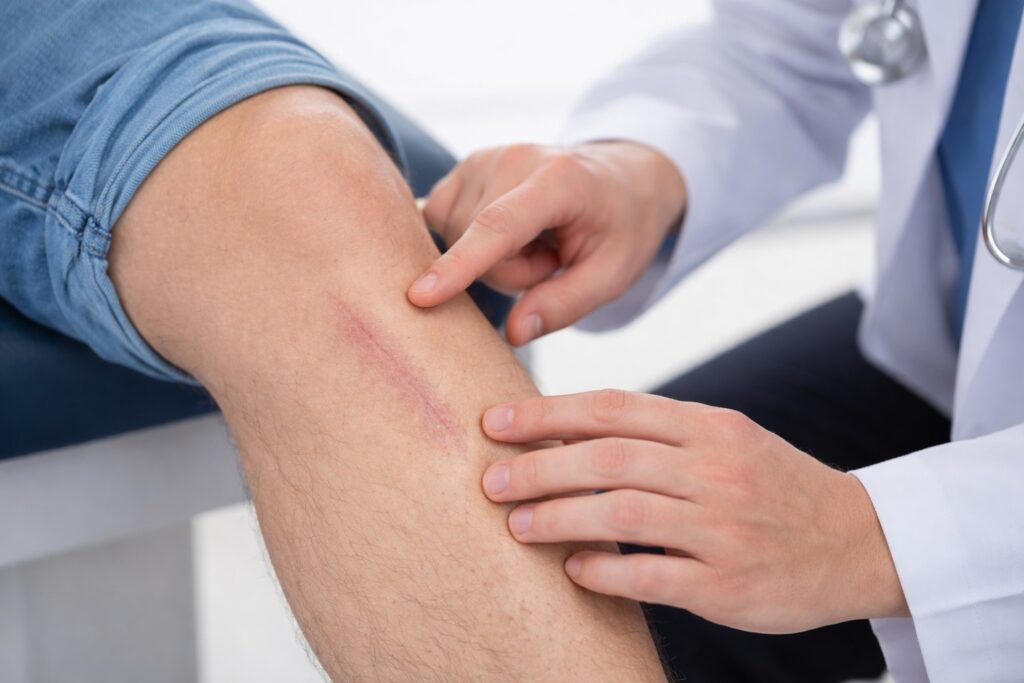
Scar tissue shows up in different ways. Each type affects the body differently.
Superficial Scars
Superficial scars affect the skin and top layers of connective tissue. Even small scars can reduce mobility if they cross joints or muscle lines.
Fascial Adhesions
Fascia connects muscles, tendons, ligaments, and organs. Adhesions bind these layers together. Fascial adhesions often cause pain far from the original injury.
Post Surgical Scar Tissue
Surgical scars often involve deeper layers. Cesarean section scars, orthopedic surgery scars, and abdominal surgery scars commonly restrict movement and cause pulling sensations.
Trauma and Overuse Scar Formation
Repetitive strain and impact injuries create micro scarring. Over time, this builds fibrous tissue that limits motion and causes chronic stiffness.
Nerve Sensitive Scar Tissue
Some scars irritate nerves. Symptoms include burning, itching, tingling, or sharp pain. These scars require careful manual therapy.
Symptoms Caused by Scar Tissue Restrictions
Scar tissue does not always hurt right away. It often shows up quietly.
Common signs include:
- Reduced range of motion
- Scar stiffness and thickness
- Pulling during movement
- Pain with exercise
- Loss of strength or coordination
Scar tissue forces your body to compensate. One restricted area shifts stress elsewhere. This leads to secondary injuries in joints, tendons, and ligaments.
Athletes often notice performance drops before pain starts. Daily movers notice fatigue and stiffness creeping in.
Evidence-Based Approaches to Scar Tissue Treatment
Research supports manual therapy for scar management.
Why Manual Therapy Works
Manual therapy applies controlled pressure and movement to scar tissue. This mechanical input signals the body to remodel collagen fibers. Massage therapy research shows scar massage improves mobility and tissue quality when performed correctly.
Collagen Remodeling and Tissue Adaptation
Scar tissue responds to stress. Proper loading helps collagen fibers realign along functional lines. This improves elasticity and strength.
Restoring Soft Tissue Glide
Healthy tissue layers slide independently. Scar tissue binds layers together. Manual scar work restores glide and improves movement efficiency.
Blood Flow and Nervous System Response
Manual therapy improves blood flow to the area. It also reduces nerve sensitivity. This helps decrease pain and guarding.
Why Rest Alone Falls Short
Rest calms inflammation but does not change tissue structure. Scar tissue treatment requires movement and manual input.
Scar Tissue Therapy Options at Dynamic Stretch Therapy
Dynamic Stretch Therapy uses multiple methods based on tissue type and symptoms.
IASTM Blades for Scar Tissue Release
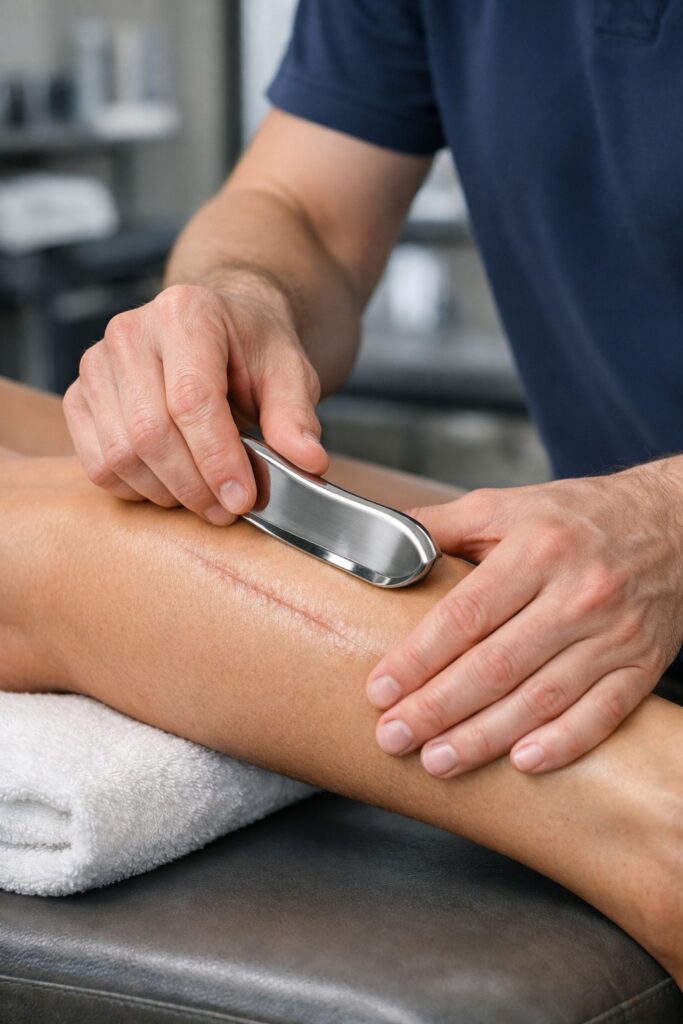
IASTM stands for instrument-assisted soft tissue mobilization. This method uses specially designed stainless steel tools to apply controlled shear force to the skin and underlying soft tissue. The goal is not to scrape randomly, but to create precise mechanical input that signals the body to remodel scar tissue.
Scar tissue often forms with collagen fibers laid down in a disorganized pattern. IASTM helps detect areas of restriction through tactile feedback, then applies pressure that encourages collagen fibers to realign along functional lines. This process supports the body’s natural healing response and improves tissue quality over time.
Key benefits of IASTM for scar tissue include:
- Improved scar mobility and elasticity
- Reduced fibrous tissue density and thickness
- Increased range of motion around affected joints
- Better blood flow to the treated area
IASTM works especially well for surgical scars, chronic adhesions, tendon restrictions, and internal scar tissue that does not respond to stretching alone. Many people recognize this method as Graston-style therapy, although technique and clinical reasoning matter more than the brand name. When applied correctly, IASTM helps break up scar tissue while protecting healthy tissue.
Fascial Stretch Therapy for Global Restrictions
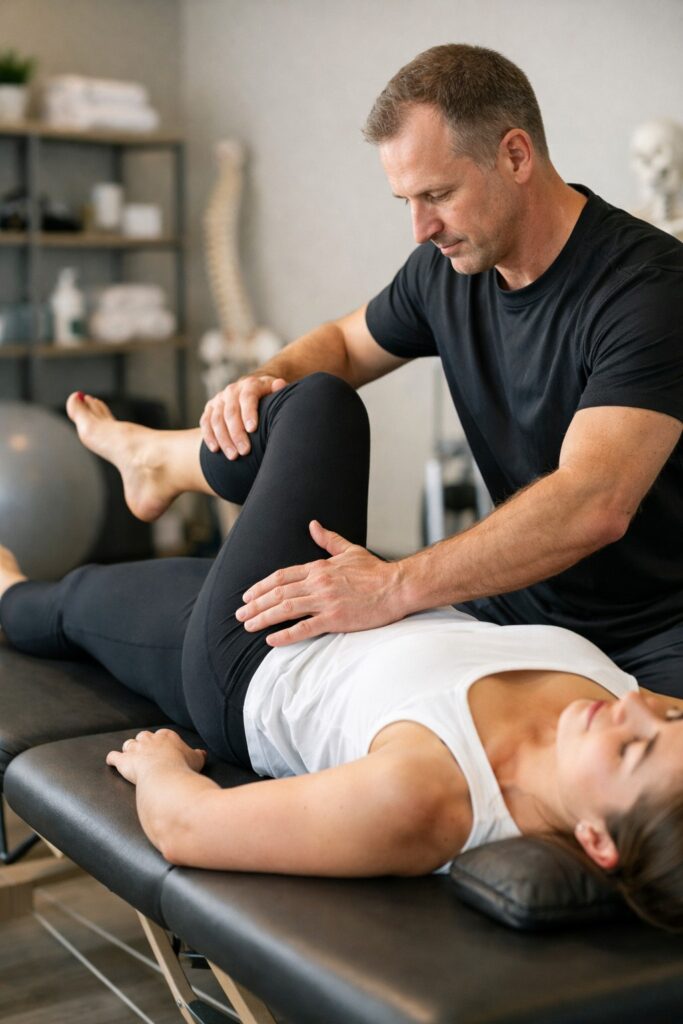
Fascial Stretch Therapy focuses on the connective tissue system as a whole, not just one scar or one muscle. Fascia connects muscles, tendons, ligaments, and joints, which means scar tissue in one area can affect movement somewhere else.
Instead of static pressure, Fascial Stretch Therapy uses traction, oscillation, and multi directional movement. This approach improves tissue glide between layers and restores joint motion without forcing the tissue. It works with the nervous system, not against it.
This therapy helps when scar tissue causes:
- Joint stiffness that feels deep or widespread
- Movement limitations that do not match the scar location
- Pulling sensations during rotation or reaching
- Loss of coordination or fluid movement
Fascial Stretch Therapy works well for long-standing scars, post-surgical movement loss, and full-body restrictions. It supports scar remodeling by improving hydration of the fascia and restoring normal movement patterns, which allows collagen fibers to adapt more efficiently.
Cupping Therapy for Tissue Separation
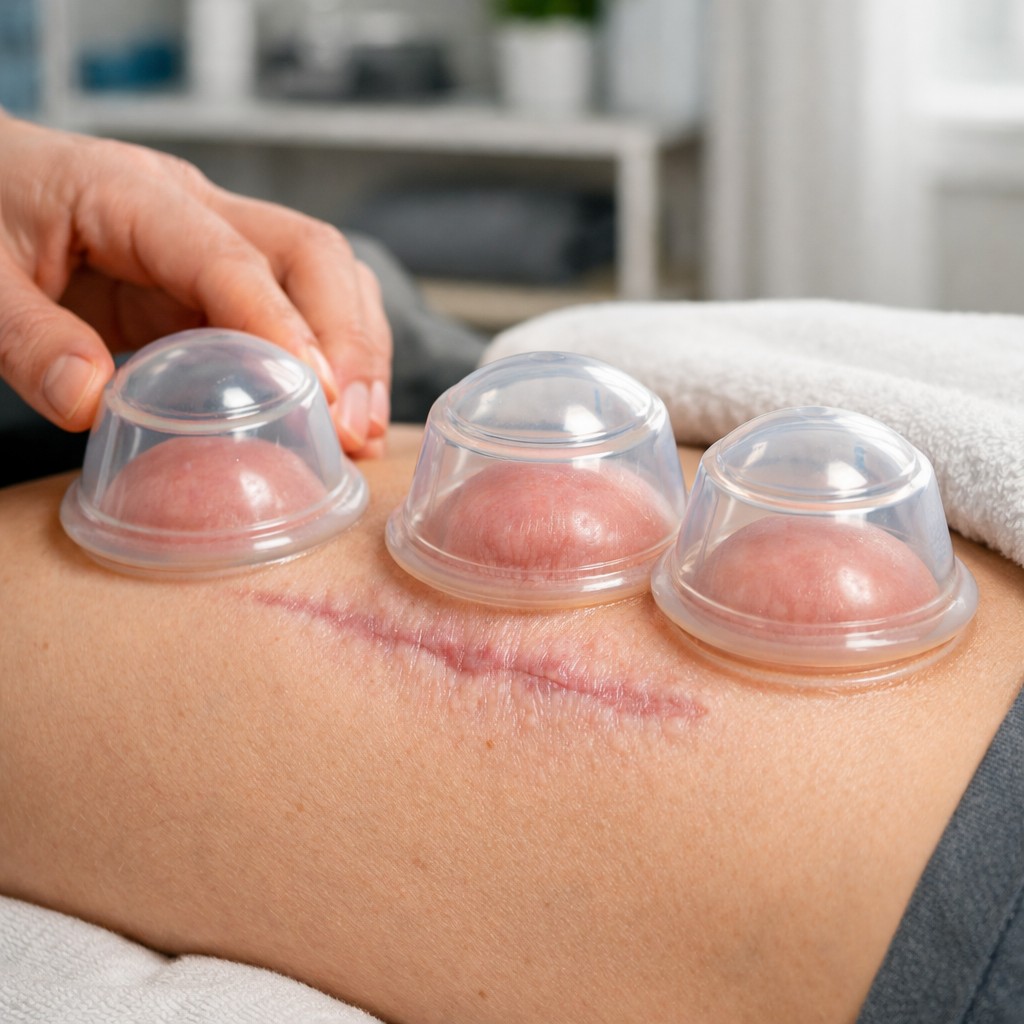
Cupping therapy uses negative pressure to lift the skin and underlying tissue. Unlike massage, which presses down, cupping gently pulls tissue upward. This creates space between layers of soft tissue that may be stuck together due to scar formation or adhesions.
Scar tissue often binds the skin, fascia, and muscle together. Cupping helps separate these layers, which improves scar mobility and blood flow to the area. Increased circulation supports the healing process and reduces stiffness.
Cupping is helpful for:
- Superficial scars
- Fascial adhesions
- Areas with poor blood flow
- Scar stiffness and thickness
Cupping works best as part of a larger scar tissue treatment plan. It pairs well with IASTM blades and Fascial Stretch Therapy, especially when tissue feels dense or stuck but too sensitive for aggressive manual work. Cupping prepares the tissue so other therapies can work more effectively.
Dolphin MPS for Pain and Nerve Sensitivity
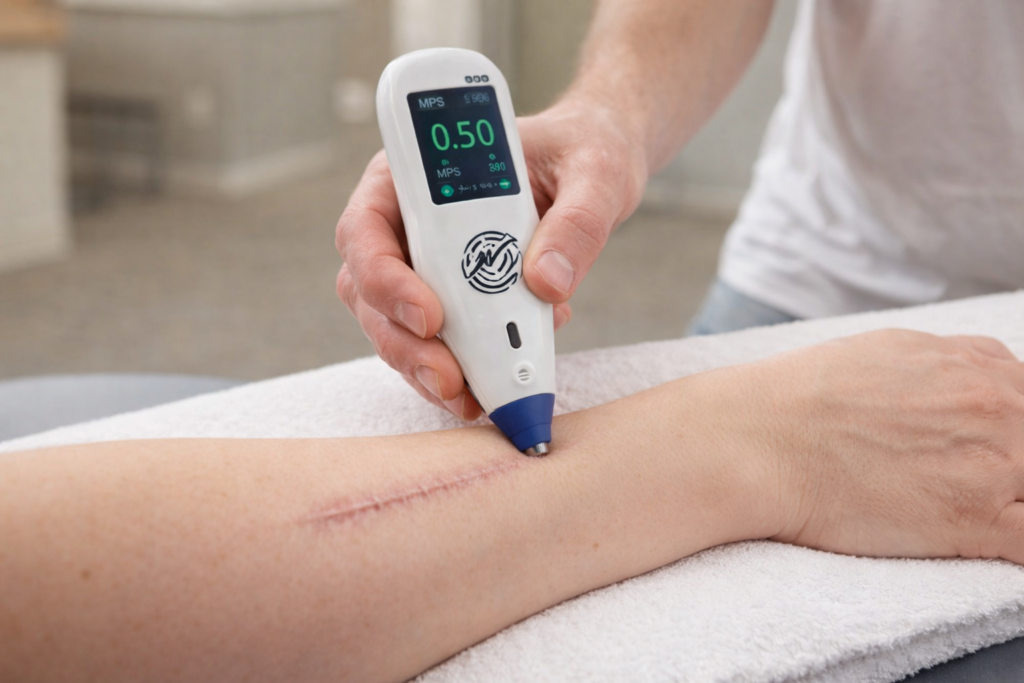
Dolphin MPS uses microcurrent electrical stimulation to address pain, inflammation, and nerve sensitivity associated with scar tissue. This method does not mechanically break up scar tissue. Instead, it helps calm the nervous system so the tissue can tolerate manual therapy.
Some scars cause pain not because of stiffness, but because nearby nerves become irritated or hypersensitive. These scars may burn, itch, tingle, or cause sharp discomfort during movement.
Dolphin MPS is useful when:
- Scar tissue causes nerve-related pain
- Inflammation limits tolerance to manual work
- Pain interferes with movement or exercise
- The area feels sensitive to touch
This therapy works best as a supportive modality, especially early in care or when pain needs to be controlled before deeper scar work begins. By reducing nerve sensitivity, Dolphin MPS allows other scar tissue treatments to be performed more comfortably and effectively.
How Scar Tissue Therapy Improves Movement and Recovery
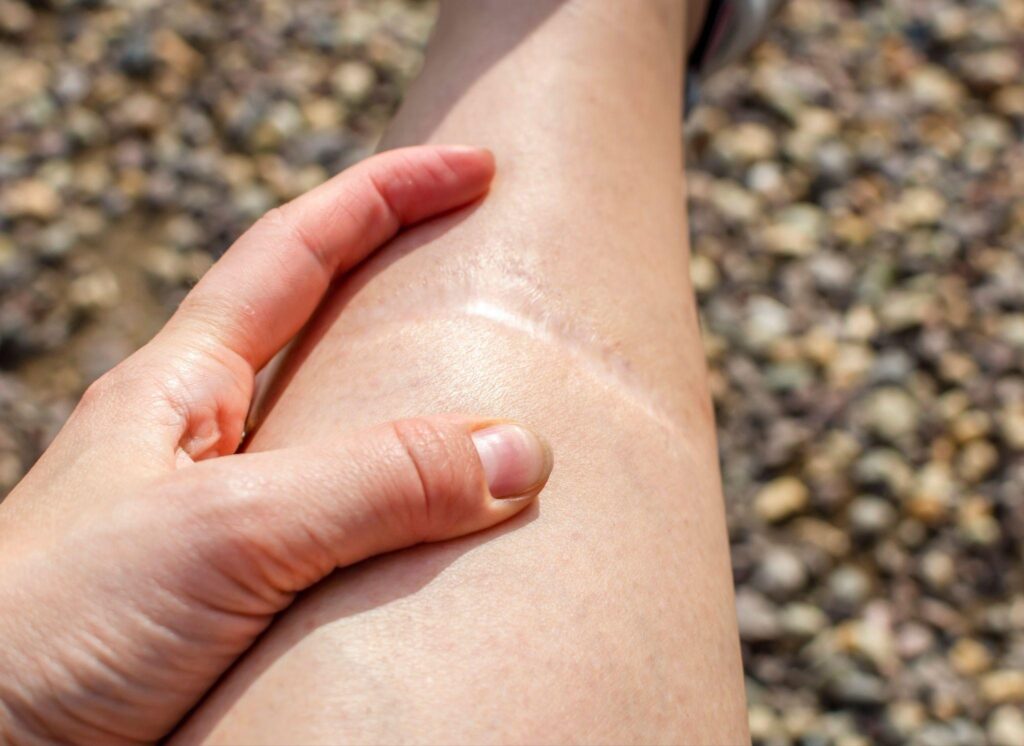
Scar tissue therapy changes how your body moves.
You may notice:
- Better joint motion
- Less stiffness during activity
- Reduced pain and pulling
- Improved posture and balance
Athletes recover faster because tissue loads properly. Active adults move more comfortably during daily life.
Addressing scar tissue lowers reinjury risk and supports long term mobility.
Why Dynamic Stretch Therapy in Honolulu
Choosing where you receive scar tissue therapy matters because experience, training, and treatment approach directly affect how well your body responds and how safely progress is made.
Andrew Escudero’s Experience and Training
Andrew Escudero is a Certified Fascial Stretch Specialist with a background in Brazilian Jiu-Jitsu. His personal injury history shaped his approach to scar work and movement care.
He understands how internal scar tissue affects performance and daily life.
Integrated Therapy Approach
Dynamic Stretch Therapy offers:
- Multiple therapy modalities
- Ongoing assessment
- Focus on function, not quick fixes
Each session adapts to how your body responds.
Who Benefits Most from Scar Tissue Therapy
Scar tissue therapy helps:
- Post-surgical patients
- Athletes and martial artists
- People with chronic pain
- Active adults with old injuries
- Anyone with restricted movement
If movement feels limited or uneven, scar tissue may be involved.
What to Expect During a Scar Tissue Therapy Session
Your session starts with movement assessment. Tissue texture and mobility guide treatment choices. You may feel pressure or stretching. Discomfort stays within a safe and tolerable range.
Progress tracking helps determine session frequency and duration. The goal stays focused on proper healing and long term improvement.
Frequently Asked Questions About Scar Tissue Therapy
1. What is the best treatment for scar tissue?
The best treatment depends on scar type and depth. Manual therapy methods like IASTM and fascial stretching show strong effectiveness for remodeling scar tissue.
2. Can old scars still improve?
Yes. Scar tissue responds to mechanical input even years later. Many people see improved mobility with consistent care.
3. Does scar tissue therapy hurt?
You may feel discomfort, but sharp pain is not expected. Therapy stays within tolerable limits.
4. Can scar tissue cause pain far from the scar?
Yes. Fascial restrictions transmit tension throughout the body, causing referred pain.
5. Is scar tissue therapy safe after surgery?
Yes, when timing and technique match healing stage. Always follow professional guidance.
Final Words – Heal Smarter and Move Better in Honolulu
Scar tissue limits movement long after injuries heal. Ignoring it leads to stiffness, pain, and compensation. Targeted scar tissue therapy restores mobility and supports proper healing. Dynamic Stretch Therapy in Honolulu focuses on function so your body can move the way it should.
Schedule a consultation to assess scar mobility, identify restrictions, and determine the best course of care based on how your body actually moves.

Andrew Escudero, Certified Fascial Stretch Specialist and founder of his practice in Hawaii, has been helping clients restore pain-free mobility since 2019. With advanced training in Fascial Stretch Therapy, Dolphin MPS, RockTape techniques, and other modern bodywork methods, he combines expertise and personal experience to support lasting healing.