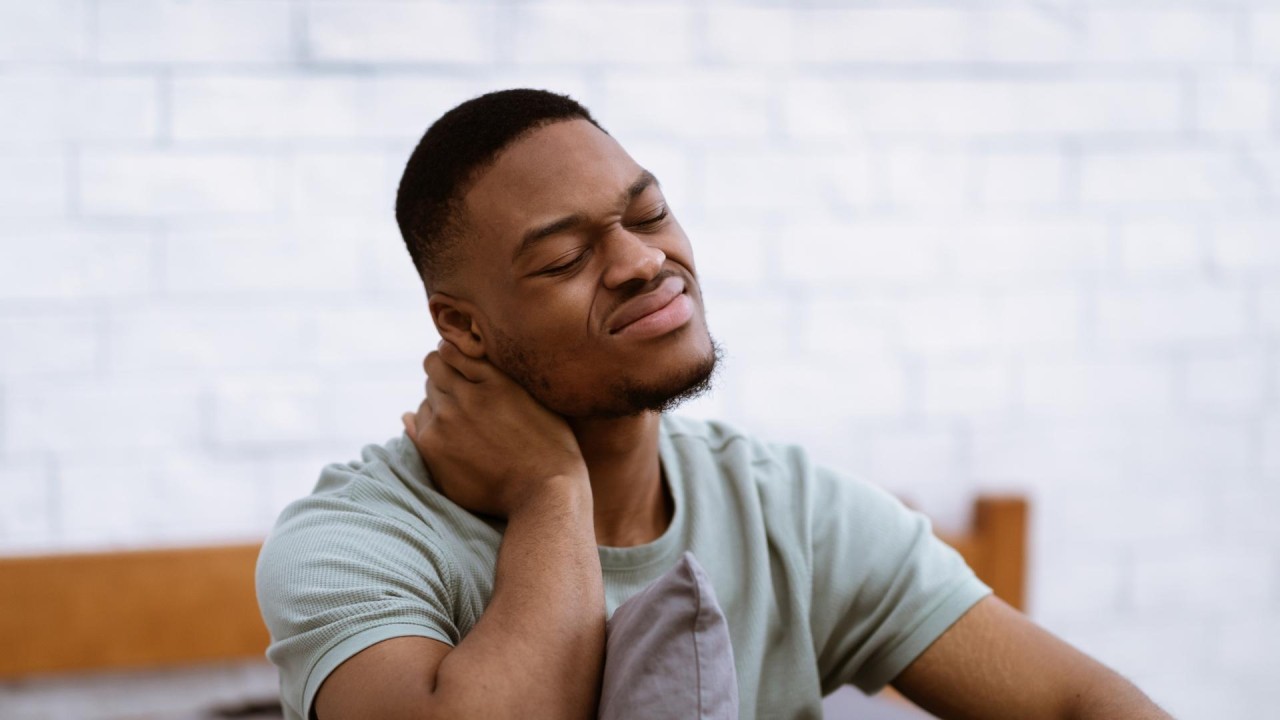
You wake up, turn your head, and something feels off. The side of your neck feels stiff, your shoulder feels tight, and simple things like driving or checking your phone suddenly feel uncomfortable.
This problem is common in Honolulu. Desk work, long hours on phones, surfing, paddling, lifting weights, and Brazilian Jiu-Jitsu can all lead to neck and shoulder pain. Over time, muscles around the trapezius, shoulder blade, and spine tighten, causing stiffness and limited range of motion.
The good news is that targeted neck stretches and shoulder mobility exercises can help relieve neck and shoulder pain. Consistent stretching loosens tight muscles, improves posture, and restores healthy movement in the shoulder joint and cervical spine.
At Dynamic Stretch Therapy in Honolulu, the focus is simple. Restore mobility with assisted stretching and corrective exercises so you can move better and feel relief faster.
What you’ll learn from this article:
- The most common causes of neck and shoulder pain in everyday life
- Why posture, long periods at a desk, and sports can lead to shoulder tightness
- How neck stretches and shoulder exercises improve range of motion and reduce stiffness
- 10 effective stretching exercises that may help relieve neck and shoulder pain
- When stretching is safe and when you should consult a healthcare professional
- How assisted stretch therapy can support recovery and long-term mobility
Why Neck and Shoulder Pain Is So Common in Honolulu
Neck and shoulder tightness does not come from just one cause. Most people develop it from a mix of posture habits, lifestyle patterns, and physical activity.
Modern lifestyle habits that create tension
First, look at how most people spend their day.
Long periods at a computer or phone push the head forward and round the shoulders. This position places stress on the cervical spine and trapezius muscle. When your head moves forward only a few inches, the neck muscles must work harder to support the weight.
Common daily habits that lead to neck or shoulder pain include:
- Poor desk ergonomics
- Long periods on phones or laptops
- Driving and commuting tension
- Stress that keeps the shoulders lifted
Over time, this posture causes rounded shoulders and forward head alignment. The muscles at the front of your shoulders tighten while the muscles between your shoulder blades weaken.
Research published by the Hospital for Special Surgery explains that prolonged sitting and poor posture contribute strongly to neck stiffness and shoulder tightness. Gentle mobility work and posture correction can help restore normal movement in the spine and surrounding muscles.
Active island lifestyles can also overload these areas
Honolulu residents often stay active, which is great for health. Still, certain sports put heavy demand on the shoulders and neck.
Activities that often create tension include:
- Surfing and paddling
- Swimming
- Golf and tennis
- Weightlifting
- Brazilian Jiu-jitsu
Many of these movements require repetitive overhead motion or strong shoulder rotation. The rotator cuff and scapular muscles work constantly to stabilize the shoulder joint.
Even well-conditioned athletes can develop chronic tightness. When recovery is ignored, the body protects itself by tightening muscles around the shoulder blade and upper trapezius. This pattern often causes neck stiffness and limits your ability to rotate or tilt your head comfortably.
How Stretching Helps Relieve Neck and Shoulder Pain
Stretching does more than simply loosen muscles. It affects joints, connective tissue, and the nervous system.
What stretching does for muscles, joints, and fascia
Gentle stretching exercises create several positive effects in the body.
Benefits include:
- Increased range of motion
- Reduced stiffness in the trapezius and levator scapulae
- Better blood circulation to muscles
- Improved posture and spine alignment
When you stretch a muscle and hold it for 15 to 30 seconds, the nervous system signals the muscle to relax. This process reduces muscle guarding and helps restore normal movement.
Studies summarized by Healthline show that regular stretching can decrease neck and shoulder tightness and improve mobility in people with chronic muscle tension.
Why targeted stretching works better than random movements
Many people perform random shoulder rolls or quick stretches when pain appears. These movements feel good for a moment, but they often miss the deeper cause of the problem.
The neck and shoulders function as a connected system that includes:
- The cervical spine
- Upper back muscles
- Chest muscles
- Shoulder stabilizers
Tight chest muscles pull the shoulders forward. Weak scapular muscles allow the shoulder blade to drift out of alignment. Both problems increase strain on the neck.
A trained stretch therapist or physical therapist can identify these patterns and apply guided stretching to restore balance.
Who Can Benefit Most From Neck and Shoulder Stretches
Almost anyone can benefit from better mobility in the upper body. Still, a few groups experience neck pain more often than others.
Office workers and remote professionals
Many desk workers spend eight or more hours sitting with their heads tilted toward a screen.
This habit creates forward head posture and rounded shoulders. The trapezius muscle becomes tight, and the muscles that stabilize the shoulder blade weaken.
Typical symptoms include:
- Neck stiffness
- Headaches
- Tight upper back muscles
- Shoulder fatigue
Simple neck stretches and posture exercises can help reverse these patterns and reduce tension.
Athletes and active adults
Athletes rely heavily on shoulder mobility for performance. Without proper recovery, tight muscles and joint restriction develop.
Stretching exercises can help athletes:
- Improve shoulder joint range of motion
- Reduce soreness after training
- Support rotator cuff health
- Maintain proper scapular movement
For sports like Brazilian Jiu-Jitsu, wrestling, or paddling, mobility work can make a huge difference in preventing injury.
People dealing with everyday aches and stress
Sometimes neck tightness has nothing to do with sports or desk work.
Stress alone can cause people to squeeze their shoulders upward without realizing it. Poor sleep position can also strain the levator scapulae or trapezius muscle.
Stretching can help release this tension and restore normal movement patterns.
Safety First: When to Stretch and When to Get Professional Help
Stretching is generally safe. Still, there are times when caution matters.
Signs that gentle stretching may be appropriate
You may benefit from stretching if you experience:
- Mild stiffness
- Muscle tightness after exercise
- Postural discomfort
- Reduced range of motion
In these cases, slow stretching exercises often provide relief.
Warning signs that require medical evaluation
Certain symptoms require evaluation by a healthcare professional.
Seek medical help if you notice:
- Numbness or tingling in the arms
- Sharp or radiating pain
- Recent trauma to the neck or shoulder
- Severe headaches or dizziness
- Muscle weakness in the arms
A physical therapist or medical professional can determine whether stretching is safe in these situations.
Why guided therapy can be safer for persistent pain
Persistent pain sometimes requires a more structured approach.
A trained stretch therapist can:
- Correct alignment during stretches
- Adjust intensity
- Protect sensitive tissues
Guided sessions also address deeper connective tissues around the shoulder blade and cervical spine.
10 Effective Neck & Shoulder Stretches That May Ease Pain
Before starting these stretches, remember a simple rule. Move slowly, breathe steadily, and stop if you feel pain.
Below is a quick overview of several stretching exercises commonly used in physical therapy and rehabilitation.
| Stretch | Main Target | How Long |
| Upper trapezius stretch | Side of neck | 15–30 seconds |
| Levator scapulae stretch | Back of neck | 15–30 seconds |
| Chin tuck | Posture muscles | 10 repetitions |
| Eagle arms | Upper back | 20 seconds |
| Cross-body shoulder stretch | Posterior shoulder | 20 seconds |
| Doorway chest stretch | Front shoulders | 20 seconds |
| Neck side bend | Lateral neck muscles | 15–30 seconds |
| Shoulder rolls | Shoulder joint mobility | 10 repetitions |
| Thread the needle | Thoracic spine | 10 repetitions |
| Assisted stretch therapy | Deep connective tissue | Guided |
Upper Trapezius Stretch
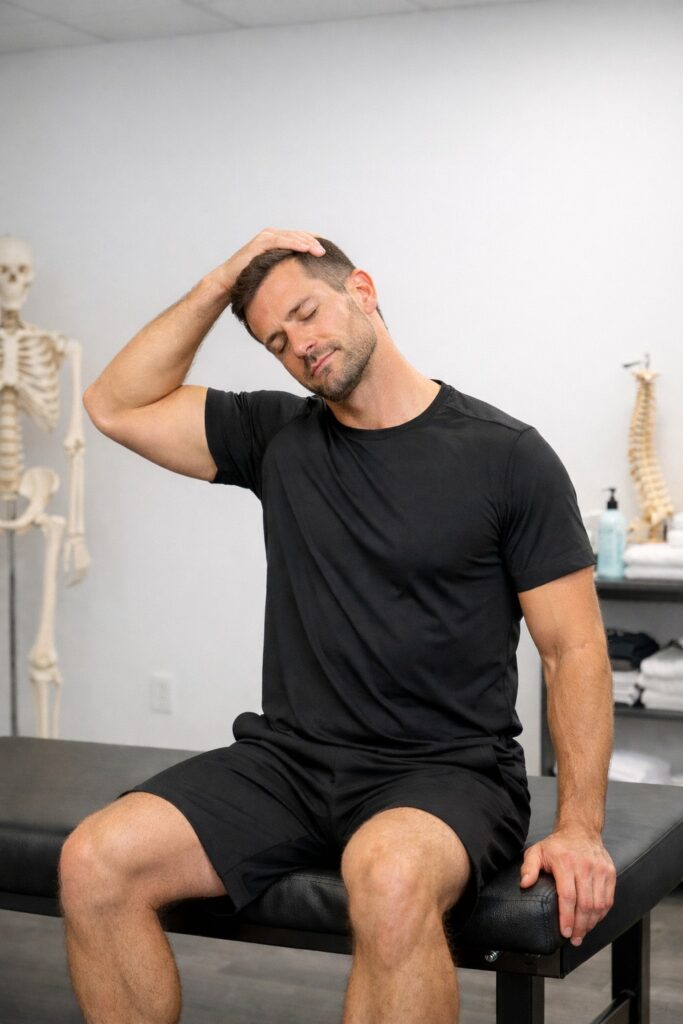
Sit with a straight back. Tilt your head toward your shoulder until you feel a stretch along the side of your neck.
Place your head with your hand gently to increase the stretch. Hold each stretch for 15 to 30 seconds.
This exercise targets the trapezius muscle, which often becomes tight from stress or poor posture.
Levator Scapulae Stretch
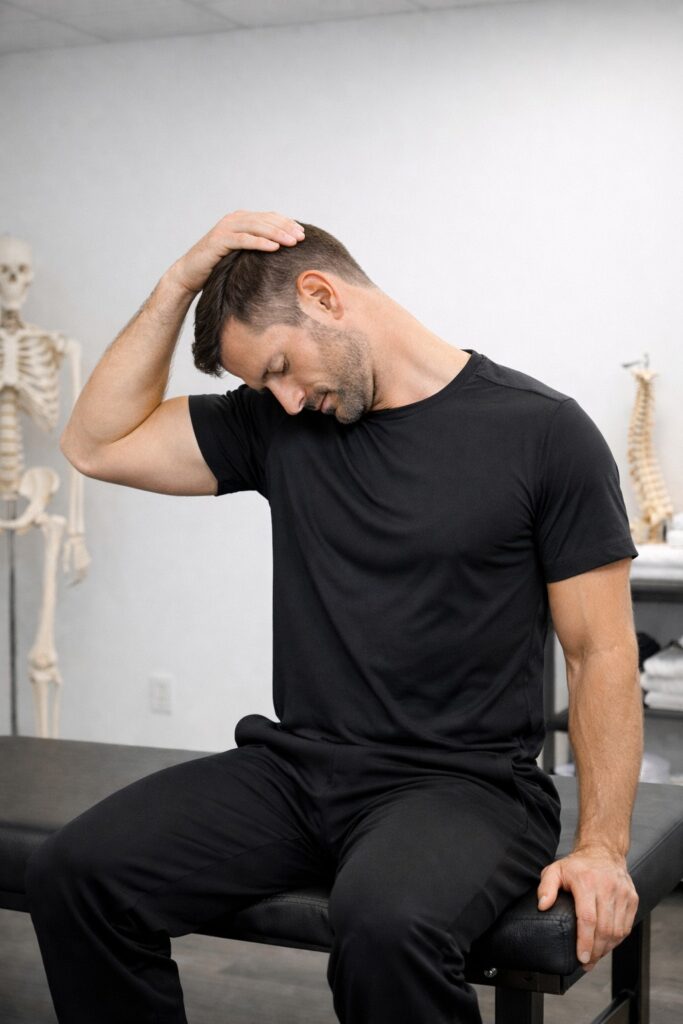
This muscle connects the shoulder blade to the neck and often causes pain when tight.
Turn your head slightly, then bring your chin toward your chest. You should feel a stretch along the back of your neck.
This stretch works well for people who wake up with a stiff neck.
Chin Tuck Exercise

Chin tucks strengthen deep neck stabilizers.
Sit upright and gently pull your chin backward without tilting your head. Hold for a few seconds.
Repeat the stretch about ten times.
This exercise helps correct forward head posture and supports better spine alignment.
Eagle Arms Stretch
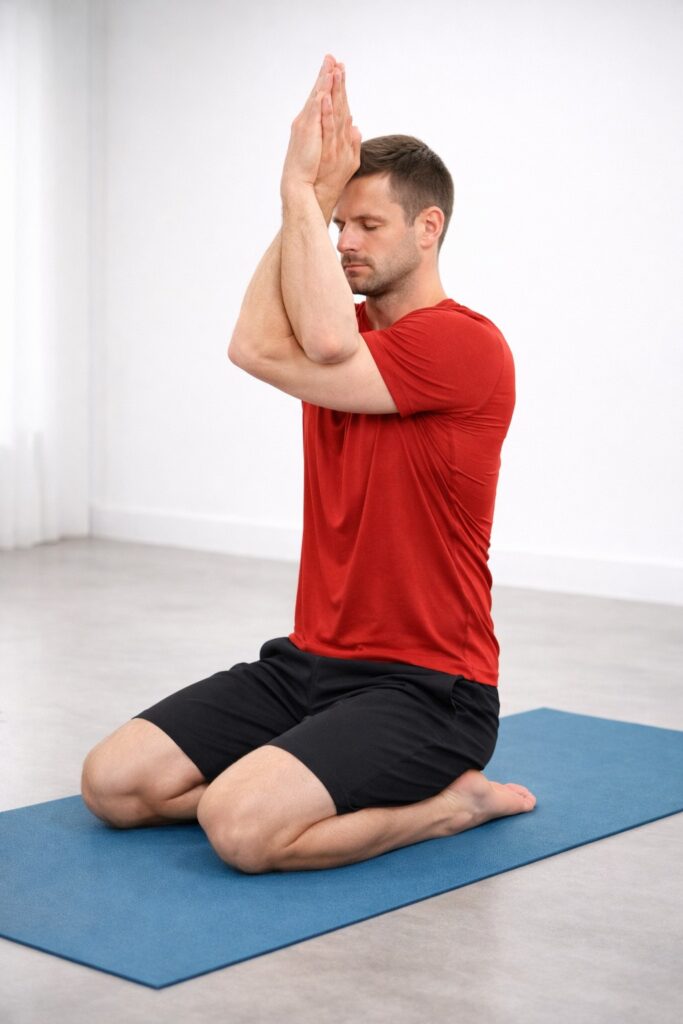
The eagle arms stretch open the upper back and shoulders.
Cross one arm over the other and bend both elbows. Raise the elbows to shoulder height and hold.
This movement stretches the muscles around the shoulder blade and upper back.
Cross Body Shoulder Stretch
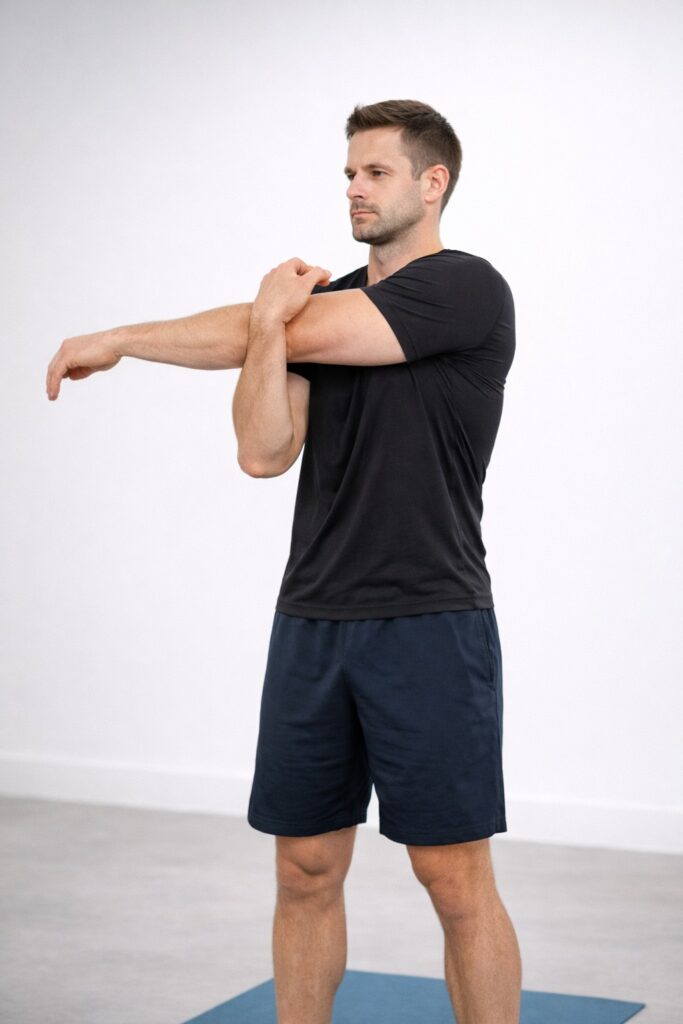
Bring one arm across your chest and hold it with the opposite arm.
Keep your shoulder relaxed and hold the stretch for about 20 seconds.
This stretch targets the back of the shoulder and can help relieve shoulder pain after workouts.
Doorway Chest Stretch
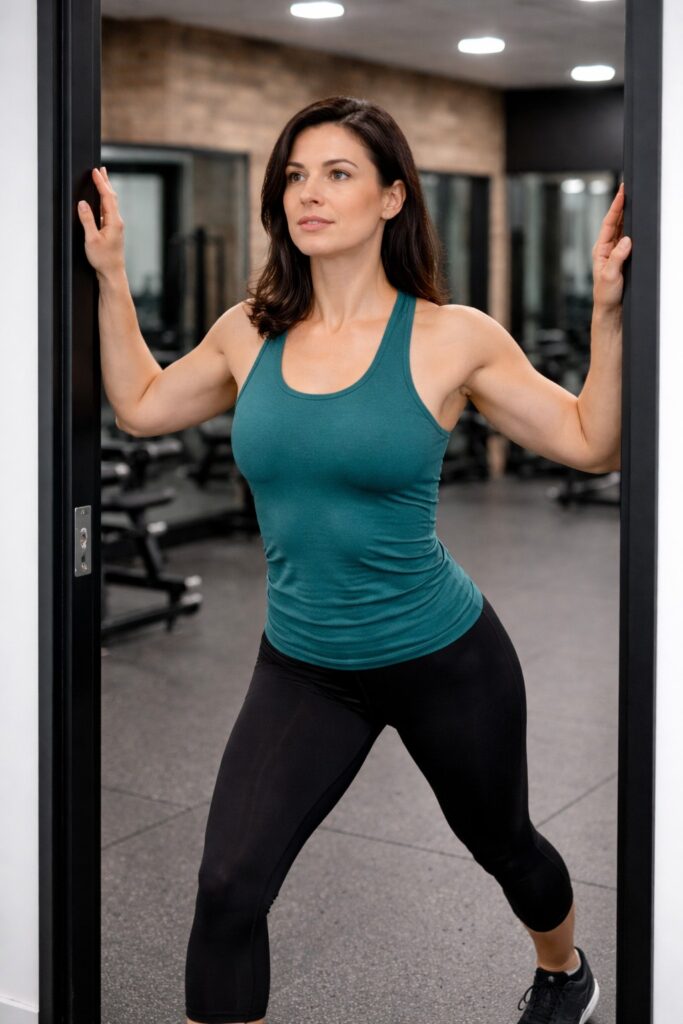
Stand in a doorway and place your forearms against the frame.
Step forward slowly until you feel a stretch across the front of your shoulders.
This movement helps correct rounded shoulders and improve posture.
Neck Side Bend Stretch

Sit upright and tilt your head sideways.
Bring your ear toward your shoulder and hold the stretch.
You should feel a gentle stretch along the side of your neck.
Shoulder Rolls
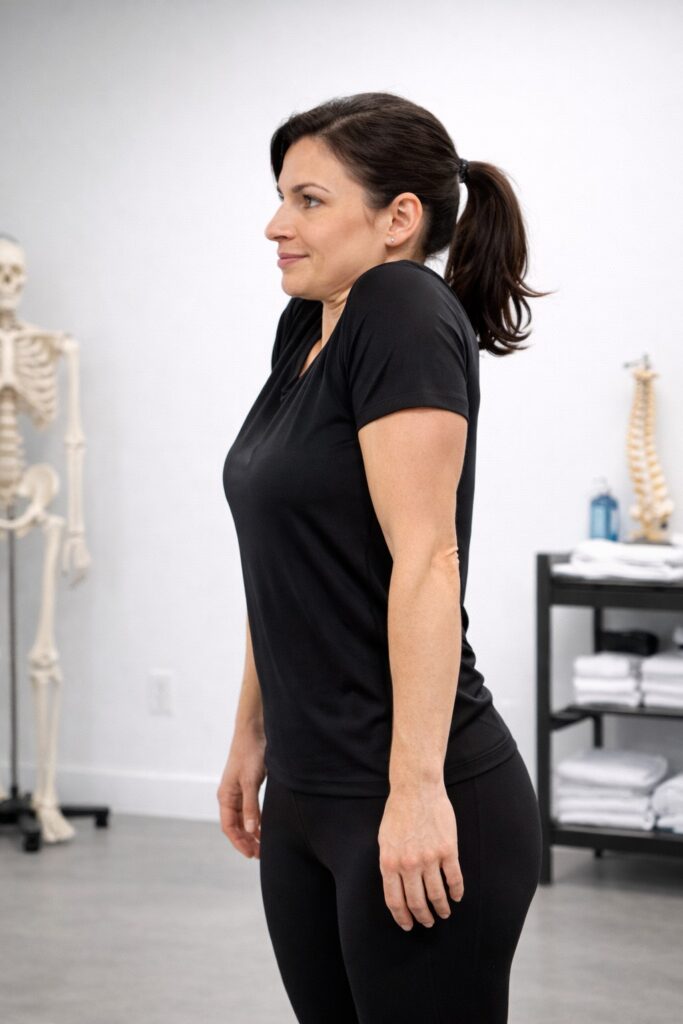
Roll your shoulders slowly in circles.
This simple exercise increases blood flow and reduces shoulder tightness.
Perform ten slow repetitions.
Thread the Needle Stretch
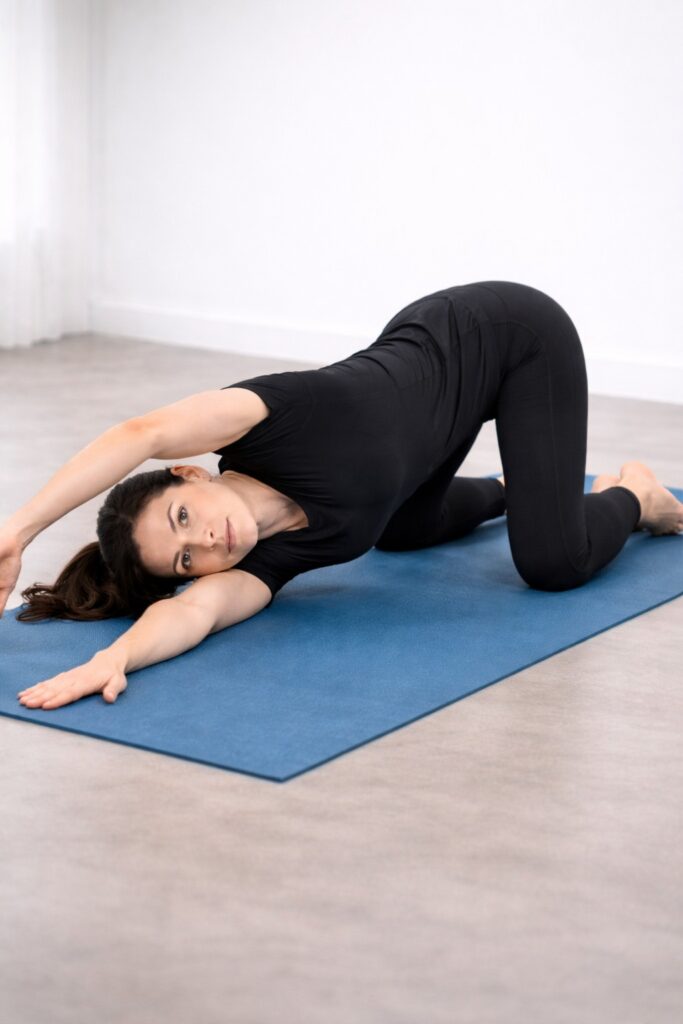
Start on hands and knees.
Slide one arm under your body and rotate your upper back.
This movement improves mobility in the thoracic spine, which can decrease neck and shoulder pain.
Assisted Stretch Therapy
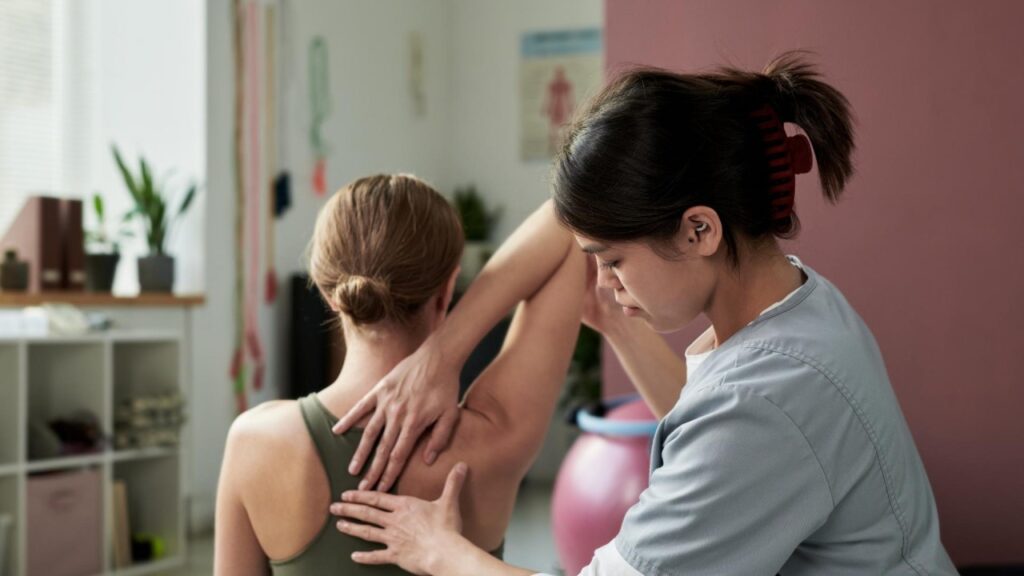
Some muscles respond better to assisted techniques.
A stretch therapist can apply traction, stabilize the shoulder joint, and guide the stretch safely. This method often produces deeper relaxation in tight connective tissue.
How to Get the Most Relief From These Stretches
Stretching works best when done consistently.
Frequency, consistency, and timing
Short daily sessions often work better than occasional long sessions.
Many people notice improvement after three to four weeks of regular stretching.
Try stretching:
- In the morning for stiffness
- After exercise
- Before bed to relax muscles
Technique tips that make stretching more effective
Follow these simple guidelines:
- Breathe slowly
- Keep your shoulder relaxed
- Move gradually
- Stop if you feel pain
Holding each stretch for 15 to 30 seconds allows the muscle to relax fully.
Common mistakes to avoid
Some stretching habits actually make pain worse.
Avoid:
- Bouncing during stretches
- Overstretching muscles
- Ignoring posture
- Stretching through nerve pain
Gentle control always works better than forcing a movement.
Why Professional Stretch Therapy Can Work Better Than Self-Stretching Alone
Self-stretching helps, but it has limits.
The limits of DIY stretching
Some muscles are difficult to stretch alone.
Common problems include:
- Compensation patterns
- Poor alignment
- Missing deep muscle restrictions
This often explains why people stretch daily yet still feel neck or shoulder pain.
Benefits of assisted stretch therapy
Assisted stretching allows deeper muscle relaxation.
Benefits include:
- Better joint alignment
- Deeper connective tissue release
- Improved shoulder blade movement
A trained professional can also combine stretching with mobility work and corrective exercise.
How Dynamic Stretch Therapy approaches pain relief
Dynamic Stretch Therapy combines several methods such as Fascial Stretch Therapy, LifeStretch, muscle flossing, and cupping.
These techniques focus on restoring motion in the shoulder joint, spine, and surrounding fascia.
The goal is simple. Help your body move freely again without tension or restriction.
Why Choose Dynamic Stretch Therapy in Honolulu
Finding the right practitioner matters, especially when dealing with chronic pain.
A practitioner’s story rooted in recovery
The journey behind Dynamic Stretch Therapy began with Brazilian Jiu-Jitsu injuries and recurring muscle tightness.
Stretch therapy changed everything. Mobility improved, pain decreased, and recovery became easier.
This experience eventually led to formal training and professional certification.
Advanced training and certifications
Professional training includes:
- Fascial Stretch Therapy certification
- IASTM blading
- Kinesiology taping
- Muscle flossing
- Cupping therapy
- LifeStretch mobility work
These techniques support recovery, flexibility, and rehabilitation.
Local expertise for Honolulu clients
Honolulu has a unique lifestyle. Many residents surf, train in martial arts, paddle, or spend long hours working remotely.
Stretch therapy designed for these activities can help keep your body healthy and mobile.
Frequently Asked Questions
1. What are the best stretches for neck and shoulder pain?
Upper trapezius stretches, levator scapulae stretches, chin tucks, and doorway chest stretches are commonly recommended by physical therapists. These exercises target muscles that often cause neck and shoulder pain.
2. How often should I perform neck stretches?
Most people benefit from stretching once or twice per day. Holding each stretch for 15 to 30 seconds and repeating several times can improve flexibility over a few weeks.
3. Can stretching improve posture?
Yes. Stretching tight chest muscles and strengthening the upper back helps correct rounded shoulders and forward head posture.
4. Is mild soreness normal after stretching?
Mild soreness can occur when starting a new routine. Sharp pain or tingling is not normal and should be evaluated by a healthcare professional.
5. When should I stop stretching and consult a professional?
Stop stretching if you feel:
- Sharp pain
- Numbness or tingling
- Muscle weakness
- Persistent pain that does not improve
A physical therapist or healthcare professional can determine the cause.
Conclusion
Neck and shoulder pain often develops slowly. Poor posture, repetitive movement, and stress gradually tighten the muscles around the cervical spine and shoulder blades.
Stretching exercises can help restore mobility, reduce stiffness, and support better posture. When practiced consistently, these movements improve range of motion and reduce daily discomfort.
If pain continues or mobility remains limited, professional stretch therapy may provide deeper relief. At Dynamic Stretch Therapy in Honolulu, the focus stays on helping people move better, recover faster, and return to the activities they enjoy. Schedule a personal consultation and achieve relief today.

Andrew Escudero, Certified Fascial Stretch Specialist and founder of his practice in Hawaii, has been helping clients restore pain-free mobility since 2019. With advanced training in Fascial Stretch Therapy, Dolphin MPS, RockTape techniques, and other modern bodywork methods, he combines expertise and personal experience to support lasting healing.